Classifying marine protozoa
Researchers at the University of Fribourg have been investigating the typical characteristics of single-cell foraminifera, and in the process they have discovered a new species.
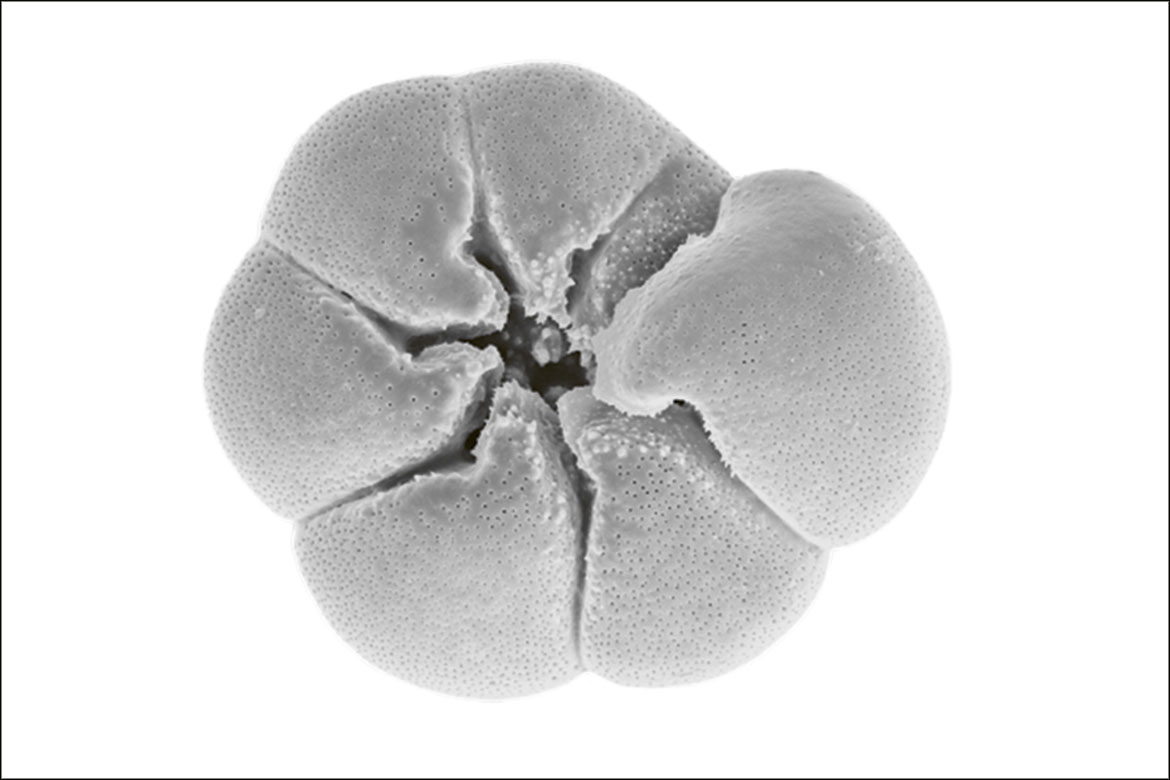
The one side looks like a Viennese bread roll, the other like a snail: The shell of a unicellular foraminifera under an electron microscope. | Image: J. Schönfeld et al. (2021)
At first glance, they look like snail shells. But in reality, they are the shells of water-dwelling, single-cell organisms, so-called foraminifera, which are invisible to the naked eye. Researchers at the University of Fribourg collected 368 specimens of the genus Ammonia in the shallow waters off the Adriatic coast, then dyed them pink in order to determine their species under a microscope. They were thereby able to evaluate what characteristics can be used to distinguish foraminifera reliably from one another. In the process, they even discovered a previously unknown species.