Going where the pepper grows
Protecting the rainforests from human beings used to be her main goal. Today, the sustainability researcher Julie Zähringer is convinced that preserving Nature means including the local population in the process.
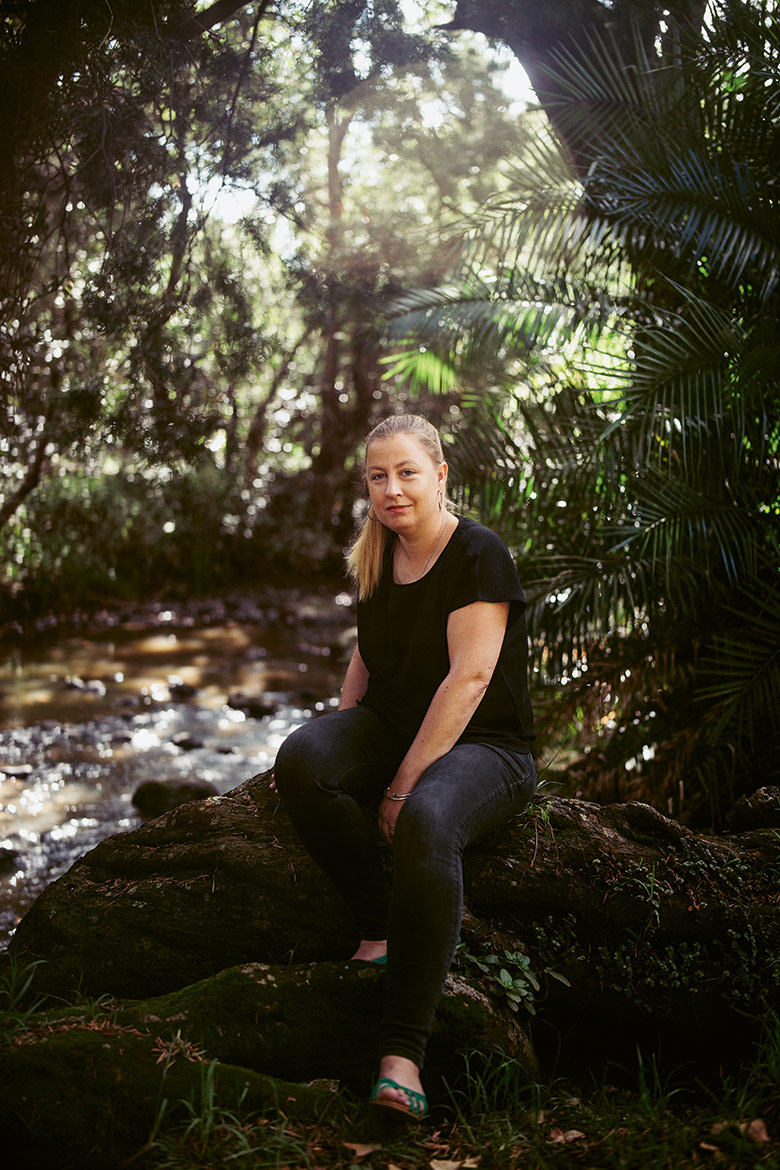
Out and about in the jungles of the world: Julie Zähringer hasn’t given up hope that humans might still find their true place in Nature. | Image: Kang-Chun Cheng
Whenever the small plane touches down on the rickety runway among the rice fields at Madagascar’s Maroantsetra airport and its door opens, a torrent of hot, humid air rushes in that makes your T-shirt and hair stick to your body. The smell of sweat mingles with the scent of vanilla, cloves and pepper. The sustainability researcher Julie Zähringer loves this jumble of impressions that are so unmistakably Madagascan, and yet are known to so few people.
A plane lands here just once a week, and the only national road – more of a bush track, really – is interrupted by muddy rivers. But most of the villages here in the north of the island can only be reached on foot anyway. The expeditions that Zähringer has been undertaking for twelve years have taken her through the least accessible areas of the world. They’re usually protected rainforests with people living on their borders who for decades have ploughed the land, cleared it, harvested crops, bred cattle and mined there – and in doing so have become entangled in all sorts of global interests. Such peoples are finding themselves with less and less space to live – not least on account of Nature conservation regulations.
But before she starts talking about all that, Zähringer tells us about her adventures on her research trips. She usually gets a friendly welcome, though sometimes there’s been mistrust when a blonde European woman suddenly pops up in the midst of an indigenous community. “In Madagascar, a lot of rosewood was being chopped down illegally and then exported. Suddenly, we were suspected of having brought the police into the village”, she says. “We had to flee. The mob could have attacked us”. Another time, her group was suspected of working for the tax authorities. “Nobody wanted to talk with us anymore”. But information can also be vital for survival. When vanilla prices soared astronomically, people also began to spend accordingly. Villas for the vanilla barons shot up out of the ground like mushrooms. But this wealth led to corruption and theft among the locals. Vanilla was soon as valuable as silver – and it was literally hanging down to be plucked.
So vanilla plantations are now full of danger. They might be wonderfully fragrant, but if you take one false step, a hidden bear trap could tear your foot to shreds. You have to know these things as a foreigner. But in any case, Zähringer doesn’t just walk into an indigenous village on her own – not least because of the local languages. Besides German, English, French and Spanish, says Zähringer, she only speaks a little Haitian Creole, Wolof and Malagasy.
Madagascar is an example of how the actions of people in the rainforest depend hugely on global markets. National parks can help to protect against improper land use, but they’re not enough. The products of these regions are in demand across the world, and the people here are fighting for survival. Zähringer’s aim is to learn more about how we might truly be able to protect tropical forests. “Species loss and climate change are resulting in conservation efforts. But for this protection to work, the local population also has to benefit from it, and they need incentives to get involved”.
For example, it can be a good idea to have local parks managed by the indigenous people themselves – albeit with financial support. Zähringer is also helping several farmers in Madagascar to build beehives so that they can make better use of the little land that remains to them alongside the nature reserves. “Instead of handing out flyers, we take them to expert beekeepers”.
Zähringer and her team talk to the village elders and their families to try and find the best solutions. What influences their decisions? What do they dream of for their future? At the same time, her team analyses satellite images and maps, calculates possible future scenarios and drafts possible solutions for environmental problems. After a moment’s reflection, she says: “We are researching the last, large tropical forests that still exist in the world. They are extremely endangered. It’s complicated”.
National parks aren’t enough
Just how complicated is something that Zähringer only realised gradually. When she attended grammar school, she wanted to save the killer whales. During her biology studies she became fascinated by the jungle and its wild animals. In her free time, she danced to African music. She organised a volunteer placement for herself in Ghana. “I had this romantic idea that I’d arrive in a national park, I’d hear music in all the villages, and I’d help the poorest of the poor to save their wild animals. How naïve I was!”, she says.
Zähringer was able to move in with the family of the park manager. She helped out in the park during the day, but then realised that the park director was also occupied all night: “People were constantly coming to his house to complain about the national park. One time the elephants would be practically eating the farmers’ hair off their heads, another time monkeys would be attacking their children”, she says. “So I realised that if you want to protect Nature, you have to think about the people too. We didn’t learn that in biology classes”. Today, Zähringer has various different specialisations. She has a bachelor in biology, a master in environmental sciences and a doctorate in geography and sustainable development.
Right now, Zähringer is sitting in a café in Kenya, where she’ll spend four months developing ideas together with the Wyss Academy for Nature. For example, climate change entails shifting rain phases and longer periods of drought, meaning that herdsmen are finding less and less food for their animals.
So Zähringer and her team are busy calculating how more fodder might be harvested, and how to achieve greater biodiversity. They then discuss their scenarios with the local population. “We’re not interested in simply publishing our results in specialist journals or in imposing something on people”, she insists. “We’re trying to provide those affected with decision-making tools that they can use”. It’s a relatively new approach, she says. “But we’re in the process of redefining the role of research. What gives me hope more than anything are the local researchers who might one day go into politics”.
Counting on local researchers
Zähringer has used SNSF money to organise an exchange project between Madagascar and Laos. “I’ve never seen a forest as endangered as the one in Southeast Asia”, she says. Forests are being turned into pasture to satisfy the hunger for meat of the populations in China and Vietnam.
“And where the rainforest is still standing, it’s become silent. Birds, mammals and reptiles have all been illegally hunted or sold to make medicinal products”. On their Madagascan journey, she and her team realised that the landscapes there could soon look like northern Laos if things don’t change.
Zähringer speaks quickly, assuring us that she certainly isn’t going to grow tired! Hardly anyone has ever visited the Masoala National Park in north-east Madagascar. People in Switzerland only know its landscapes from the Masoala Hall at Zurich Zoo. And yet this forest is of inestimable value to mankind as a whole. It’s an oasis of biodiversity, a treasure trove of many medicinal herbs and a huge means of storing carbon. “As long as I’m working”, she says, “I’m not going to give up hope that we humans might still find our true place in Nature”.