Invasive species
Choosing a good metaphor isn’t easy. And it’s best to be cautious about vocabulary that is potentially xenophobic or militaristic.
Photo: Florian Fisch
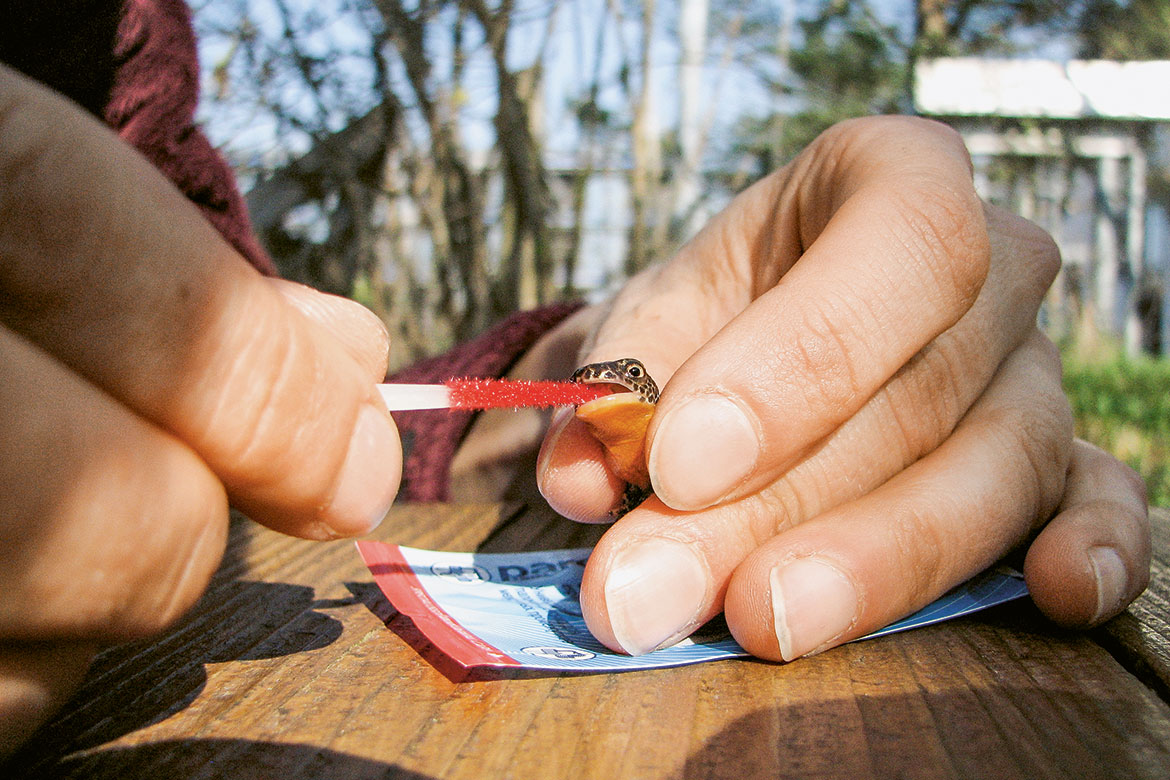
The quagga mussel has been spreading rapidly in Switzerland since 2015, displacing other mussels and inflicting general damage. In cases like this, we speak of an ‘invasive species’. This term was coined by the British ecologist Charles Elton back in 1958, though it’s criticised today for its supposedly xenophobic, even militaristic connotations. That’s just what the linguists Hugo Caviola and Claudia Keller claimed recently in an article on the web portal of the Swiss Academy of Sciences. They insist that erecting binary opposites like this is unhelpful – one species good, another bad – while the metaphor itself puts the blame on the species instead of on us humans, who are ultimately responsible. They are therefore proposing new terms, such as ‘displaced’, ‘potentially harmful’ and ‘imported species that are propagating’.
However, Rachel Janovsky and Eric Larson of the University of Illinois Urbana-Champaign have observed that militaristic vocabulary such as ‘fights’, ‘natural defences’ and ‘natural enemies’ are widespread in the field of ecology: “We find the term ‘invasive’ useful”, they write, “for distinguishing between introduced species that do or do not cause harm where non-native, or spread rapidly or widely after introduction”. But they also admit that they find “some sensationalistic language like ‘war’ on invasive species to be hyperbolic or distasteful”. Either way, researchers ought to be more circumspect in the language they choose.